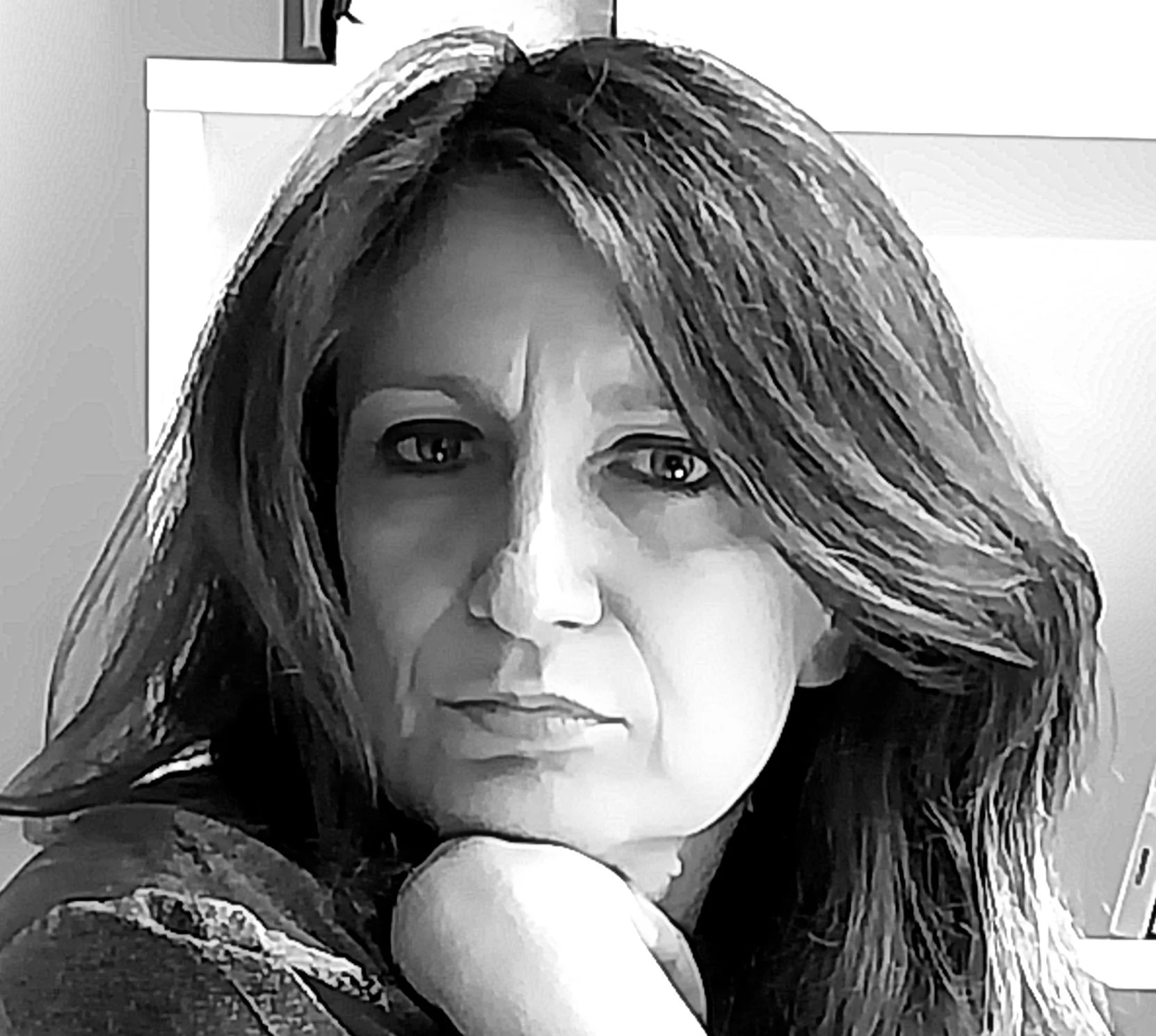
I am a historian of science interested in the ways science and technology have shaped how people understand the world and their place in it. My research focuses on the material and visual cultures of science, the relationship between scientific and artisanal practices, and the social and political uses of science and technology.
I am a Professor of History and History of Medicine at Yale University and Chair of the History of Science and Technology Division at the Yale Peabody Museum.
My work focuses primarily on science, technology, and medicine in seventeenth- and eighteenth-century Europe and has taken me from the social worlds of experimental electricity in Italy and Britain to the workshops and manufactories of Old Regime France, and from the politics of encyclopedism to industrial espionage and the fabrication of scientific facts..
I am the author of three monographs:
My most recent book, In the Land of Marvels. Science, Fabricated Realities, and Industrial Espionage in the Age of the Grand Tour (Johns Hopkins University Press, 2023) explores the relationship between science and eighteenth-century information cultures through the lens a medical controversy and its life on the printed page. I show that reputed experimenters and academicians, along with travel writers, eagerly manipulated facts to create fabricated realities. These fabrications in print, just like fake news circulating in the cybersphere, had real life effects: they secured or started careers, promoted new medical treatments, spread long-lasting stereotypes, and created imagined pasts. In the Land of Marvels received the 2025 Paul Bunge prize for best book on the history of scientific instruments.
My second book, Artisanal Enlightenment: Science and the Mechanical Arts in Old Regime France (Yale University Press, 2017) argues for the centrality of the mechanical arts and the world of making in the French Enlightenment. With a radical shift of historical actors, it foregrounds the figure of the artiste, a period term for learned artisans who defined themselves in contrast to savants and routine-bound craftsmen. I show that early encyclopedic projects on the arts and crafts – which paved the way to Diderot’s and d’Alembert’s Encyclopédie – were information gathering activities designed to support the colonial and commercial schemes of the French state. I place the artiste as a central actor in these efforts and, more generally, in the changing landscape of France’s political economy. Artisanal Enlightenment was awarded the 2019 Louis Gottschalk prize for best book in eighteenth-century studies by the American Society for Eihteenth-Century Studies.
My first book, Viaggio nel paese delle meraviglie. Scienza e curiosità nell’Italia del Settecento is a study of the social spaces in which eighteenth-century electrical science flourished in Italy.
My current book project, The Compass of History, is an impossible biography of Flavio Gioia, the legendary medieval inventor of the mariner's compass who never existed. By following Gioia's remarkable afterlife from the sixteenth century to the present, I explore how histories of technological invention have shaped understandings of modernity and why fabricated pasts persist despite historical evidence.
Alongside research and teaching, I have long been involved in bringing the history of science to the broader public through collaborations with museums. Since 2012 I have served as the Chair of the History of Science and Technology Division, an activity that has most notably resulted in the first History of Science and Technology gallery at Yale. In 2023, I co-curated Crafting Worldviews. Art and Science in Europe, 1500-1800 a temporary exhibition at the Yale Art Gallery that showcased a selection of objects from the HST collection, addressing the intextricable connections among science, art, and European colonialism. Betweeen 2004 and 2007 I collaborated on the renovation of the Museum of the History of Science in Florence, now Galileo Museum, where I curated two permanent galleries: The Spectacle of Science and Science at Home.
My work has been acknowledged with the 2025 Paul Bunge prize for best book on the history of scientific instruments, the 2019 Louis Gottschalk prize for best book in eighteenth-century studies, the 2016 Margaret W. Rossiter Prize for best article on the history of women in science awarded by the History of Science Society, and the 2015 Clifford Prize for best article in 18th-century studies awarded by the American Society for Eighteenth Century Studies. In 2012 I received the Poorvu Family Award for Interdisciplinary Teaching from Yale College.
In 2024-2025, I served as the President of the American Society for Eighteenth Century Studies.